




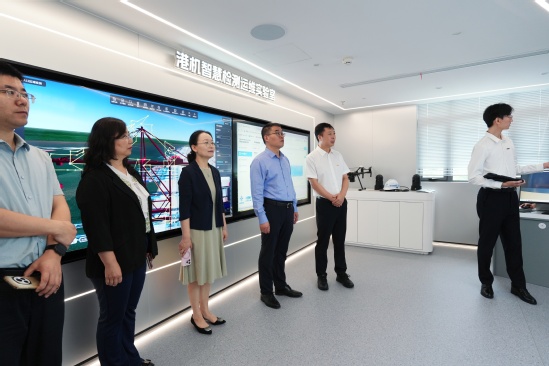
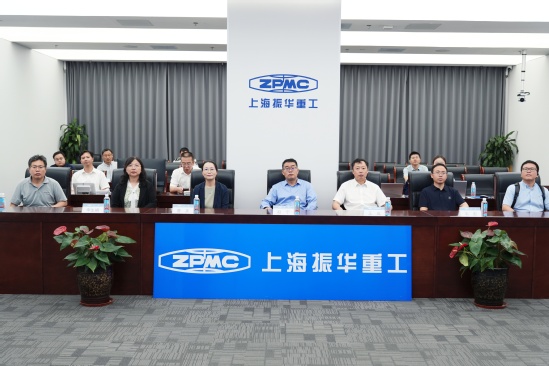
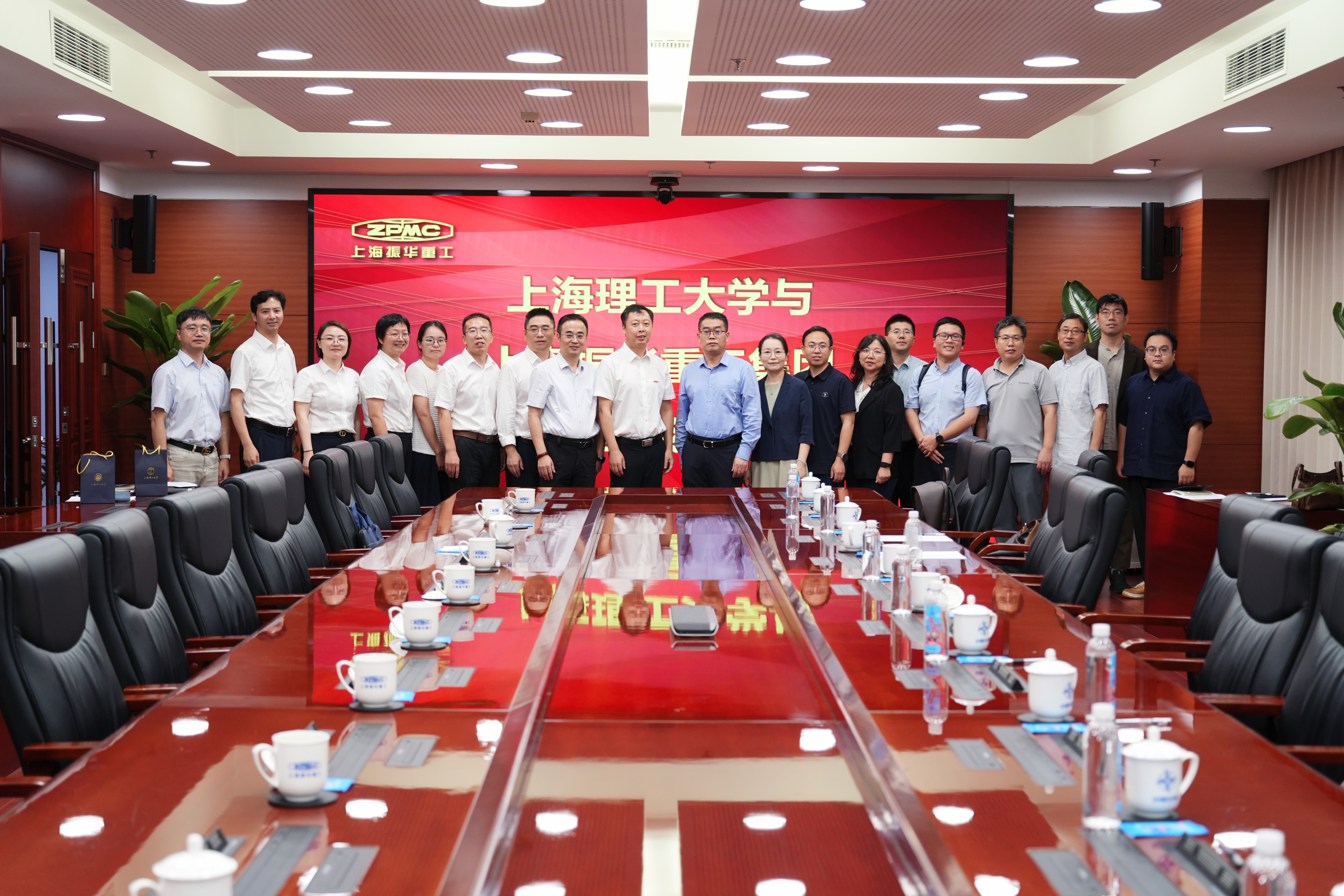
On the morning of August 11, Zhao Ning, Deputy Secretary of the University Party Committee and Secretary of the Commission for Discipline Inspection, led a delegation to Shanghai Zhenhua Heavy Industries Co., Ltd. (ZPMC) for a research visit. Wang Cheng, Deputy Secretary of the Party Committee and Chairman of the Trade Union of ZPMC, together with other enterprise executives, warmly received the delegation. Leaders from the School of Materials and Chemistry and the School of Mechanical Engineering, staff from the Student Affairs Office, faculty representatives and personnel from relevant functional departments took part in the visit. Alumni representatives of our university currently employed at ZPMC also attended the forum.
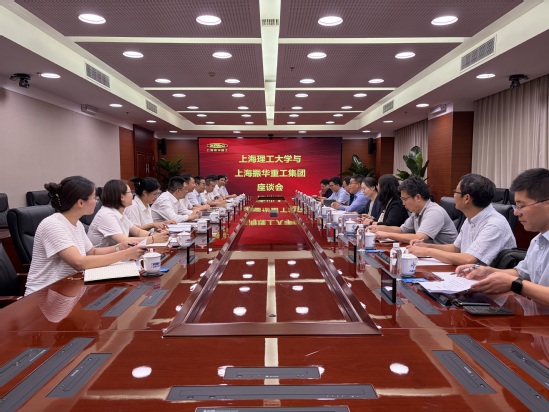
Zhao Ning pointed out that the development model of higher‑education is undergoing profound transformation, and universities are no longer enclosed “ivory towers”. Promoting in‑depth integration of industry and education and opening up channels for university‑enterprise collaboration is not only an imperative task for universities to fulfill their talent‑cultivation responsibilities and serve the regional real economy, but also a core path to achieve organic connection among the education chain, talent chain, industrial chain and innovation chain. Long‑term and stable cooperation has been built up between USST and ZPMC. The two sides have carried out extensive practices in fields such as key‑technology research, student internship training and staff training. This visit aims to further tap the potential for collaboration and establish an all‑round long‑term mechanism for industry‑education integration by virtue of complementary resources from both parties.
Wang Cheng reviewed the development history of ZPMC. As a leading manufacturer of national heavy‑equipment, ZPMC has broken the monopoly of overseas brands and been selected as a pilot enterprise for building world‑class enterprises in China. He stated that the enterprise is facing demands for technological upgrading in basic materials and equipment research and development. Meanwhile, high‑end talents are difficult to recruit at a reasonable cost. It is expected to build a collaborative talent‑cultivation platform with university resources so as to jointly tackle challenges in talent recruitment and scientific‑research development.
Subsequently, representatives from both sides held thorough discussions on university‑enterprise cooperation. Executives of different business divisions of the enterprise put forward practical demands concerning equipment manufacturing, digital transformation, market expansion and talent recruitment in light of corporate development. The two parties discussed plans for deepened cooperation. Measures including enterprise‑oriented order‑form training classes will be adopted to realize two‑way connection in talent cultivation. Both sides will further strengthen cooperation on scientific‑research projects and expand all‑round long‑term cooperation covering student internships, campus recruitment for graduates and continuing education for enterprise employees.
In his concluding remarks, Zhao Ning stated that deepening university‑enterprise cooperation to advance the integration of science and education as well as industry and education is well aligned with the national strategy of building a manufacturing powerhouse. The two parties have a solid foundation of long‑term internship cooperation, and a large number of outstanding alumni have become backbones at ZPMC. In the next stage, the university will set up a regular communication mechanism, improve the joint talent‑training system, and boost the quality and efficiency of university‑enterprise cooperation. The university will leverage its disciplinary and talent advantages to support the development of national flagship projects and high‑end‑equipment industries.
This visit achieved targeted docking with the industrial demands of a leading enterprise and laid a solid foundation for the university to optimize its training program for outstanding innovative engineering talents, expand industry‑university‑research integrated projects and broaden high‑quality employment channels for graduates. In the follow‑up work, the university will translate the consensus reached at this forum into concrete actions to deliver tangible outcomes for all university‑enterprise cooperation initiatives.
Full text: https://www.usst.edu.cn/2026/0814/c934a69841/page.htm