



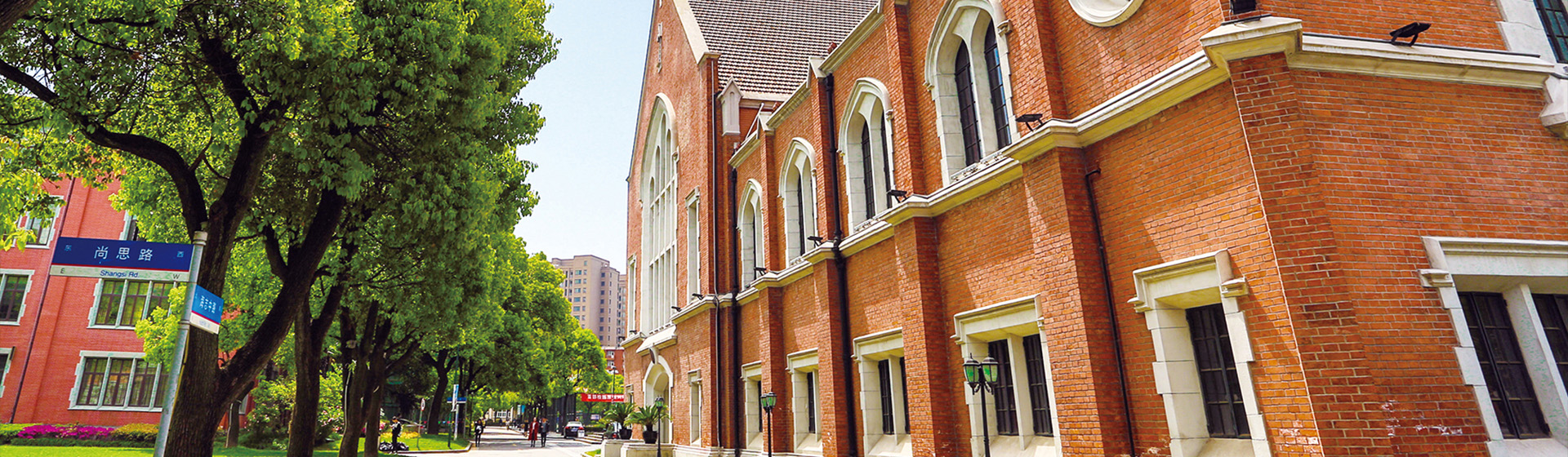
To thoroughly implement the university’s requirements for the in-depth discussion on education and teaching ideology and effectively advance the deep integration of artificial intelligence with undergraduate education and teaching, the School of Materials and Chemistry, in collaboration with the Faculty Development Center, held a training session themed AI-Empowered Improvement of Education and Teaching Competence in Meeting Room 201, Gezhi Hall, on the afternoon of May 14, 2026. Centered on the theme Exploration and Practice of Empowering the Whole Process of Classroom Teaching via General Large Language Models, the training invited Associate Professor Huang Shize from the College of Transportation Engineering, Tongji University to deliver a special lecture. Tong Yuanwei, Director of the Faculty Development Center, faculty representatives from the School of Materials and Chemistry and other schools across the university attended the event. Li Shengjuan, Vice Dean of the School of Materials and Chemistry, presided over the training.
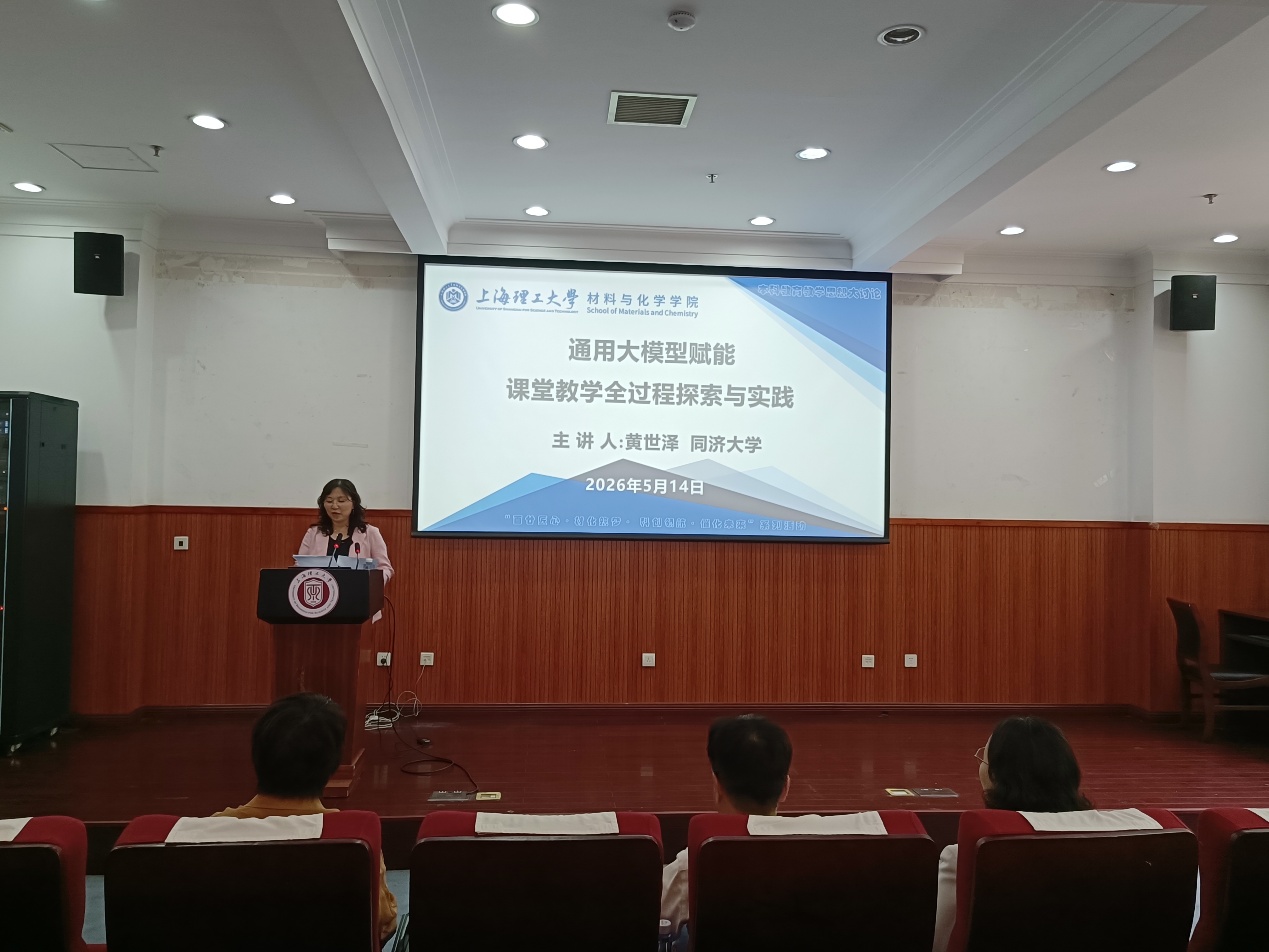
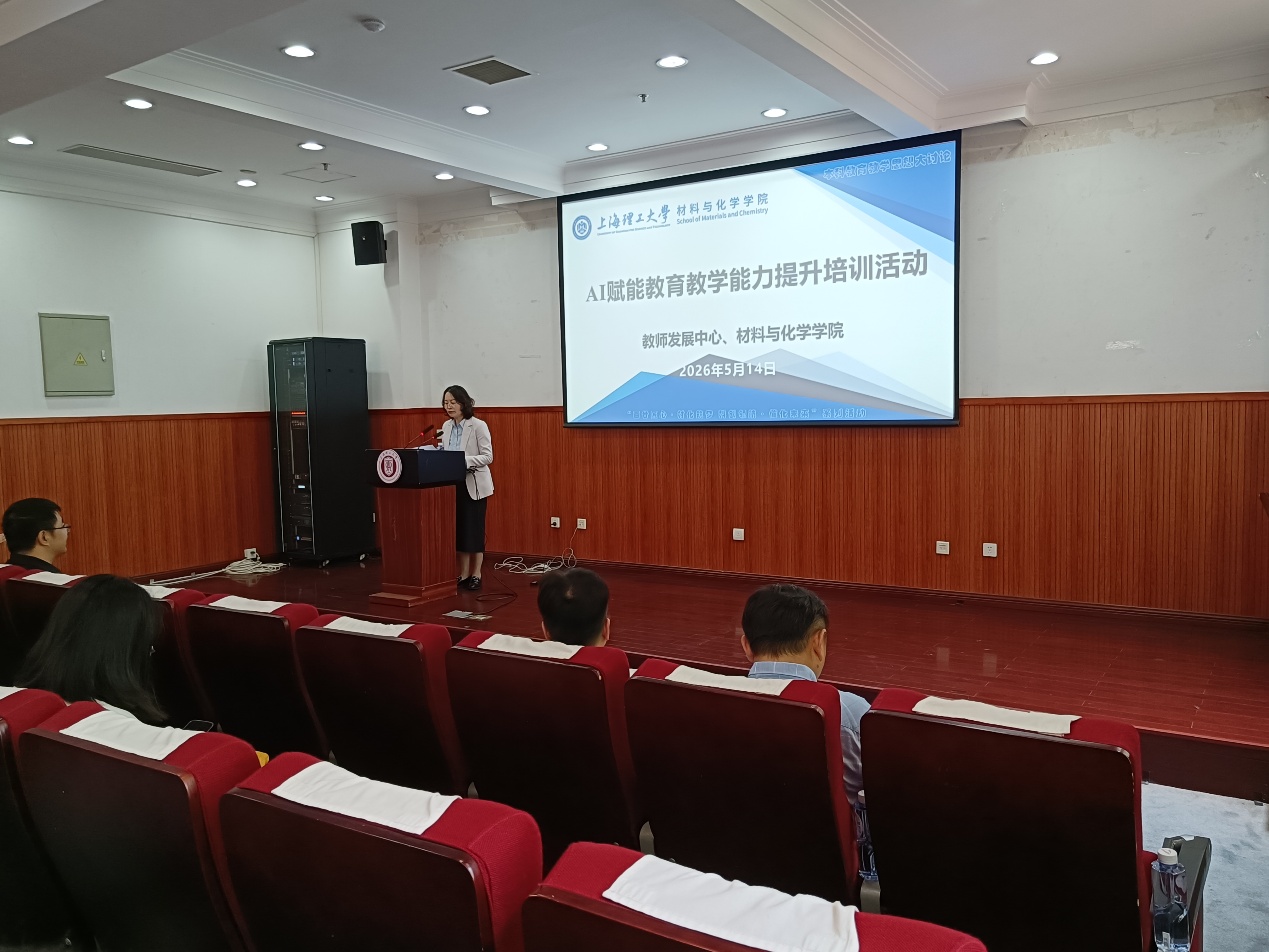
At the opening of the training, Cao Ying, Party Secretary of the School of Materials and Chemistry, delivered an opening address. She pointed out that against the backdrop of the rapid advancement of general artificial intelligence, proactively embracing AI technology and reshaping the teaching and learning ecosystem serves as a crucial approach to upgrading the quality of talent cultivation. She encouraged all faculty members of the school to take this training as an opportunity to actively explore a new synergistic teaching model featuring coordinated coexistence of teachers, students and AI, so as to lay a solid groundwork for subsequent revisions to training programs, further integration of industry and education, and the reform of the full credit system.
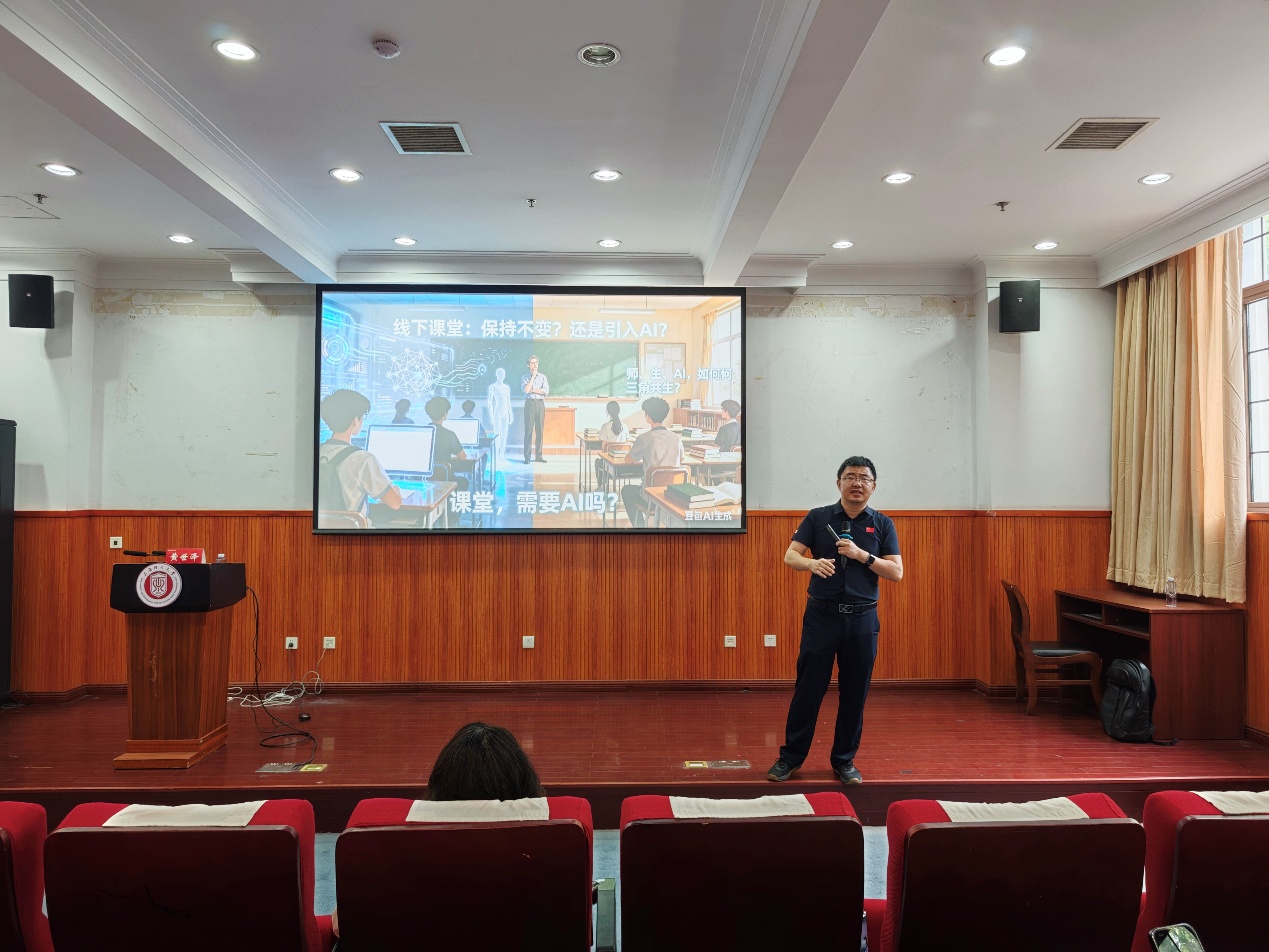
Thereafter, Associate Professor Huang Shize from Tongji University presented an insightful lecture entitled Exploration and Practice of Empowering the Whole Process of Classroom Teaching via General Large Language Models. Taking representative large models such as DeepSeek as entry points, he systematically analyzed the application logic of AI technologies in learning scenarios from students’ perspectives, and elaborated on shifts in students’ thinking and cognitive patterns amid the large model era. The lecture highlighted how AI empowers pre-class preparation (including intelligent generation of course syllabi and development of personalized teaching resources), in-class interaction (such as digital learning companions and dynamic visual presentation of knowledge points), and post-class administration (including intelligent assignment grading and adaptive test paper generation). He also shared innovative practices of his research team in developing customized AI teaching tools and constructing smart courses.
Huang thoroughly unpacked the logic behind building a new synergistic teaching ecosystem of teachers, students and AI. He proposed that teachers ought to transform their role from conventional knowledge transmitters to architects of learning scenarios, while attaching importance to mechanisms for fostering students’ critical and creative thinking under AI empowerment. Balancing theoretical frameworks and practical cases, the lecture sparked vigorous discussions among participating teachers. During the Q&A session, faculty held in-depth exchanges with Professor Huang on challenges of deploying large models in classroom instruction and the fairness of AI-assisted assessment.
This training constitutes a key component of the series of activities for the School of Materials and Chemistry’s in-depth discussion on undergraduate education and teaching ideology. It has offered a valuable platform for faculty to enhance digital literacy and innovate teaching methodologies. Moving forward, the school will steadily push forward AI-driven reforms in education and teaching, contributing to the university’s development into a high-level institution of higher learning.
Full text: https://chxy.usst.edu.cn/2026/0514/c3680a361547/page.htm