



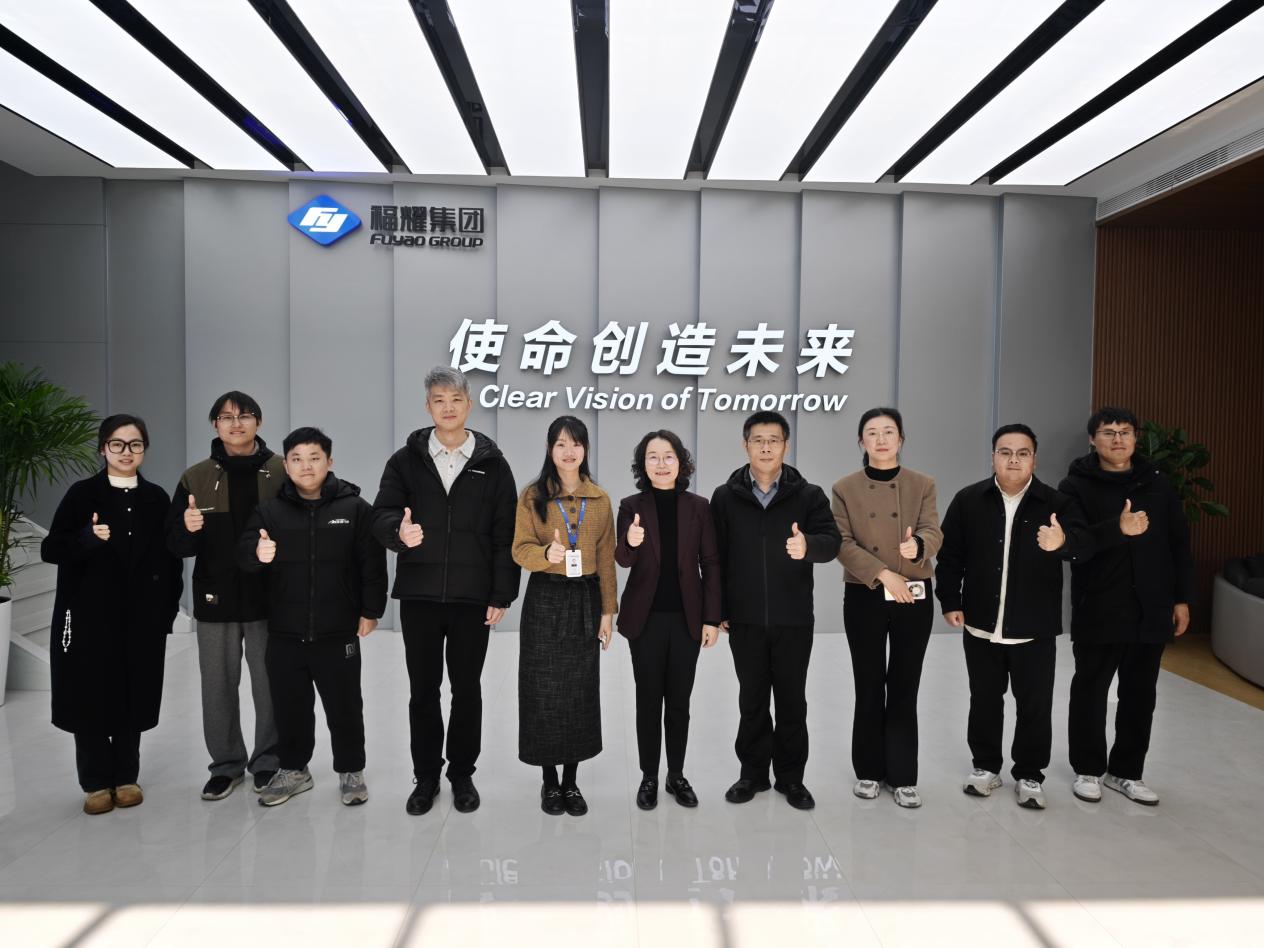
To further advance the integration of industry and education, promote collaborative talent cultivation between universities and enterprises, accurately meet the talent needs of industrial enterprises, and steadily carry out the special campaign of Visiting Enterprises to Expand Employment Opportunities, on March 13, a delegation led by Cao Ying, Secretary of the Party Committee, and Dong Xiaoliang, Deputy Secretary of the Party Committee of the School of Materials and Chemistry, University of Shanghai for Science and Technology (USST), visited Fuyao Group Shanghai Automotive Trim Co., Ltd. for on-site investigation and university-enterprise exchange forum. The delegation included Associate Professor Sun Ming from the Department of Electromechanical Materials and Forming, Lin Zhiwei, Deputy Director of the Student Affairs Office, and three student representatives. Both sides conducted in-depth discussions on core topics such as talent cultivation, internship and employment, scientific research cooperation, and industry-university-research (IUR) transformation, and jointly explored a long-term mechanism for university-enterprise cooperation. Wang Li, Human Resources Manager of the company, Mao Yinda, Manager of the Technology Development Department, and Yang Wei, Manager of the Quality Assurance Department attended the event.
At the beginning of the investigation, the two sides held a forum for exchanges. On behalf of the company, Wang Li extended a warm welcome to the teachers and students of the School of Materials and Chemistry, USST, and introduced the participating enterprise representatives as well as their respective areas of responsibility one by one. She noted that Fuyao Group is a world-leading enterprise in the glass and automotive aluminum trim industry, with its core products maintaining a leading position in the national market share, and stands as a benchmark enterprise for intelligent and high-end manufacturing in the industry. Combining the company's development plan, Wang Li gave a detailed introduction to the overall situation of the Shanghai Aluminum Parts Factory located in Anting Town, Jiading District, Shanghai.
Cao Ying gave a comprehensive overview of the university and the school to the enterprise representatives, focusing on USST’s profound background in engineering education, the School of Materials and Chemistry’s disciplinary layout, professional characteristics, faculty strength, scientific research platforms, and talent cultivation achievements. She pointed out that the School of Materials and Chemistry focuses on core fields such as new material research and development, material forming, and intelligent manufacturing, and devotes itself to cultivating application-oriented high-quality talents, which are highly aligned with the development needs of industries such as automobile manufacturing and high-end equipment. The purpose of this visit is to gain an in-depth understanding of the development trend, technological needs, and talent standards of leading enterprises in the industry, build a platform for accurate docking between the university and enterprises, promote the alignment of talent cultivation in the school with the job needs of enterprises, explore the path for in-depth integration of industry, university and research, facilitate high-quality internships and employment for students, and achieve complementary advantages and mutual benefit and win-win results for both parties.
Subsequently, Mao Yinda and Yang Wei supplemented the introduction of the company's core technological advantages, production and operation modes, and career development prospects based on their work in technological research and development and quality control respectively. Manager Wang Li focused on interpreting the company's current talent needs, elaborating on the job settings, employment requirements, career development paths, salary and welfare packages, and talent training system for related majors such as materials, machinery, and chemical engineering. She expressed a strong willingness to deepen talent cooperation with the School of Materials and Chemistry, USST, and looked forward to recruiting more outstanding graduates with solid professional skills and outstanding practical abilities.
During the exchange session, both sides conducted in-depth negotiations on specific directions for university-enterprise cooperation, and held full discussions on multiple dimensions including the joint construction of internship and practice bases, targeted talent training, industry-university-research project cooperation, teacher secondment to enterprises, student on-the-job internships, and precise employment of graduates. Dong Xiaoliang focused on student employment services, internship arrangements, and professional quality training, and coordinated the details with the enterprise's human resources department, striving to smooth the employment channel for students from campus to enterprises. Based on the school’s professional characteristics, Sun Ming exchanged ideas with the enterprise’s technical team on topics such as material process optimization and tackling key technical problems, exploring entry points for scientific research cooperation. Both sides stated that they would take this visit as an opportunity to establish a regular communication mechanism, refine the cooperation plan, and promote the implementation and effectiveness of university-enterprise cooperation. The three student representatives, based on their own professional learning, scientific research practice, and career planning, conducted face-to-face exchanges with the heads of the enterprise's technical and human resources departments, and took the initiative to ask about their concerns such as job competency requirements, internship content, and career promotion paths. The enterprise representatives patiently answered the students' questions, shared workplace experience based on their own work experience, and encouraged the students to consolidate their professional foundation, improve their practical abilities, and establish clear career goals. This zero-distance exchange enabled students to clearly grasp the industry development trends and enterprise employment standards, further clarify their own learning direction and career positioning, and effectively stimulated their enthusiasm for professional learning and practical improvement.
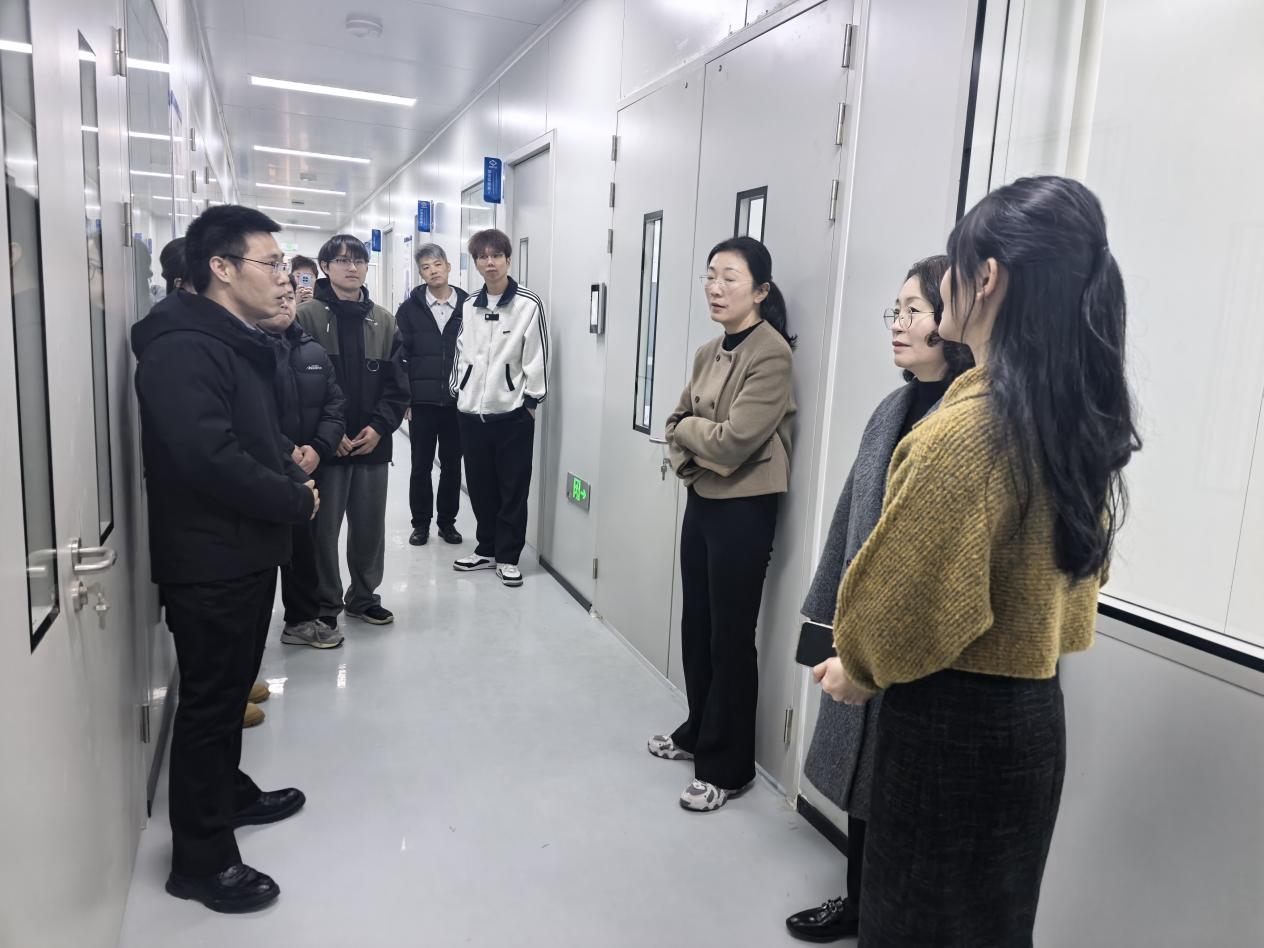
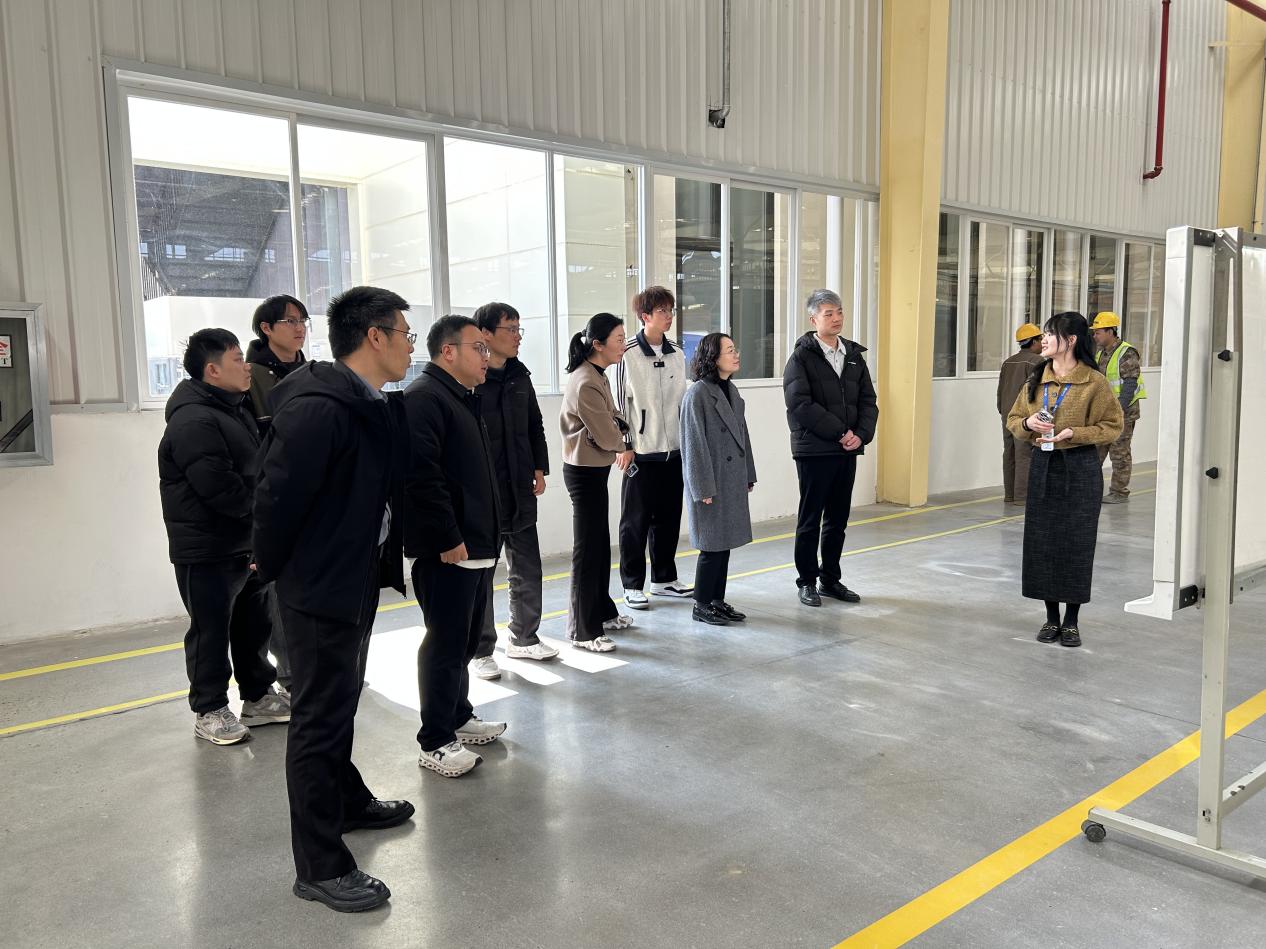
After the forum, accompanied by the relevant person in charge of the enterprise, the teachers and students of the school visited the intelligent production workshop, product exhibition area, and quality inspection area of Fuyao Group Shanghai Aluminum Parts Factory on-site. The teachers and students observed the entire production line of automotive aluminum trim parts from raw material processing, forming and forging, to finished product inspection and assembly delivery at close range, and intuitively experienced the factory's highly automated and intelligent production equipment and advanced manufacturing processes. They also gained an in-depth understanding of the enterprise's stringent quality control system, green production philosophy, and lean production model. This visit made the teachers and students truly feel the strong strength of the leading enterprise in the industry, and also enabled them to form a more concrete and profound understanding of the practical application of professional knowledge such as material forming and intelligent manufacturing.
Full text: https://chxy.usst.edu.cn/2026/0317/c3680a357446/page.htm