



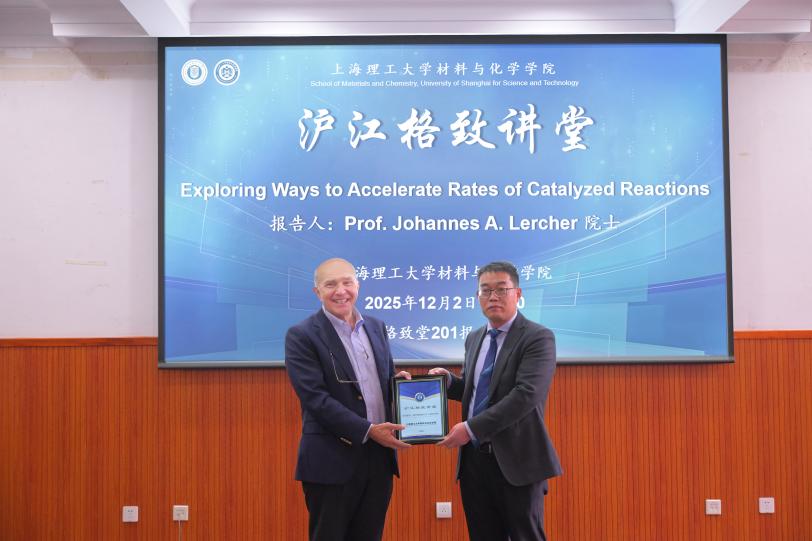
On December 2, 2025, the College of Materials and Chemistry held a special academic lecture as part of the Hujiang Gezhi Lecture Series. The event invited internationally renowned scholar in catalysis, Academician of the Austrian Academy of Sciences, Academician of the National Academy of Engineering (USA), Academician of the European Academy of Sciences, and Professor at the Technical University of Munich, Johannes Lercher, to deliver an academic report titled Exploring Ways to Accelerate Rates of Catalyzed Reactions. Zhao Ning, Deputy Secretary of the University Party Committee and Secretary of the Discipline Inspection Commission, attended the event and presented Professor Lercher with a commemorative certificate. Members of the leadership team of the College of Materials and Chemistry, along with over a hundred faculty and student representatives, participated in this academic gathering.
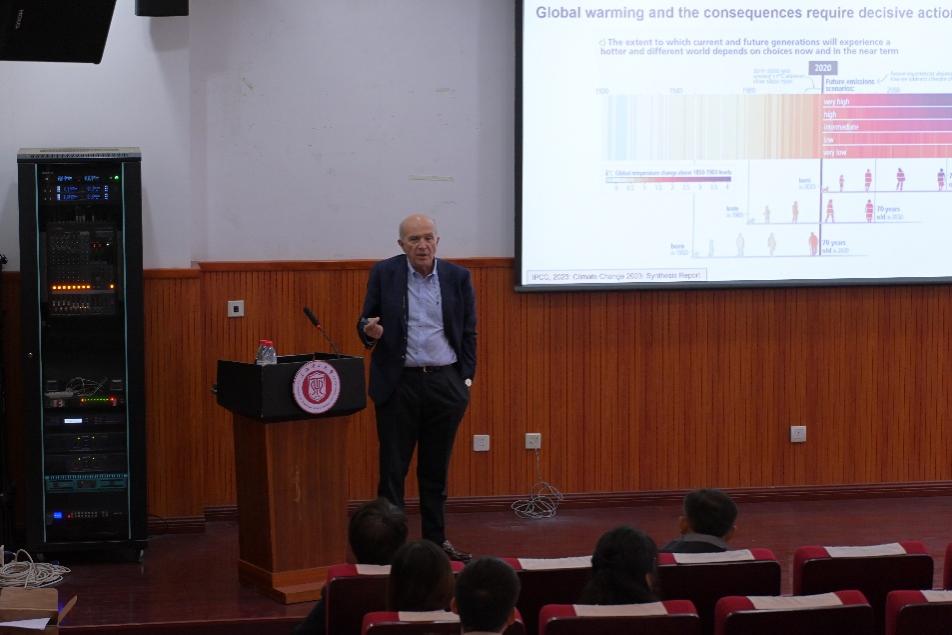
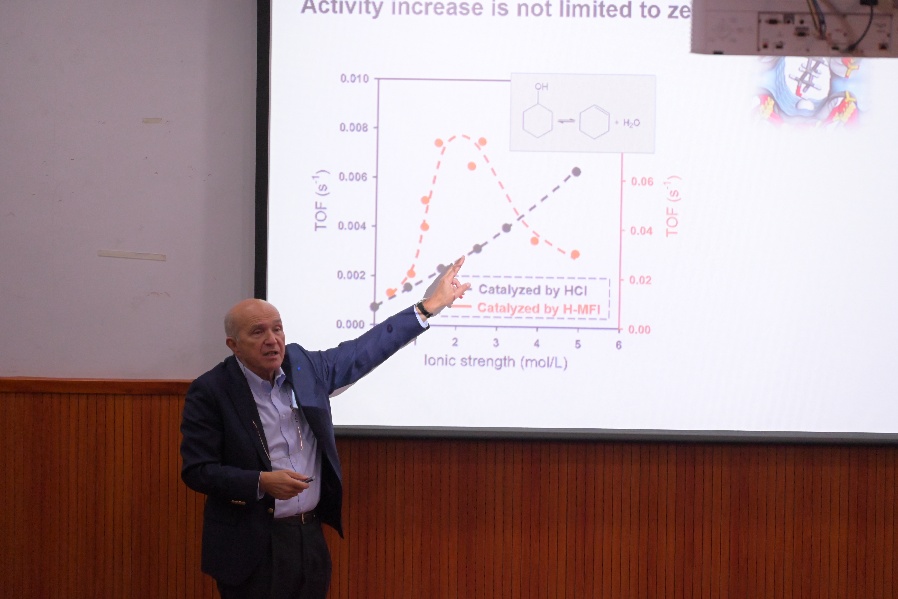
The report focused on cutting-edge topics in the field of energy catalysis. Academician Lercher began by systematically outlining the current state of global energy consumption and the distribution patterns of carbon emissions, providing an in-depth explanation of the urgency and scientific pathways for promoting carbon reduction and renewable energy development. Addressing the efficient catalytic conversion of energy molecules, he analyzed the mechanisms of catalytic reactions from the perspective of physical chemistry, proposed targeted catalyst design strategies and pathways to enhance reaction efficiency, offered innovative insights into the cyclic conversion of carbon resources such as waste plastics, and highlighted the significant implications for building a sustainable energy system.
During the subsequent academic exchange session, participating faculty and students engaged in in-depth discussions with Academician Lercher on key scientific issues, including the structural regulation of confined porous materials, optimization of reaction pathways, and mechanistic studies. Academician Lercher provided detailed and thought-provoking responses to the questions raised. His profound insights not only effectively addressed the concerns of the audience but also further stimulated their interest in research on new catalytic materials and reaction engineering.
The visit of Academician Johannes Lercher and his high-level academic report not only provided the faculty and students of our university with the latest advancements and profound insights in the field of catalysis but also established a valuable platform for direct dialogue with a world-leading scholar. This event was not only a transmission of academic knowledge but also an inspiration for innovative thinking, significantly promoting scientific research exchange and enhancing the level of international collaboration within the college.
Full text: https://chxy.usst.edu.cn/2025/1204/c3680a353252/page.psp